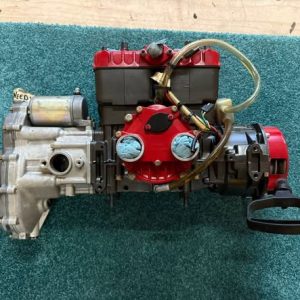
The Rotax 582 “Blue Head” RAVE Engine – Built by Rotax Rick may support an ultralight restoration, experimental-aircraft project, gyrocopter application, powered-parachute build, or replacement-engine requirement.
The Rotax 582 Blue Head can provide strong project potential, while broad Rotax 582 Aircraft Engine terminology should not imply compatibility with every airframe or propeller system.
These related keywords help connect the listing with aircraft builders, sport pilots, engine specialists, and aviation parts buyers.
Whether buyers need a Rotax Blue Head Engine, Liquid-Cooled Aircraft Engine, Two-Cylinder Aircraft Engine, or Lightweight Aircraft Engine, the complete engine package should be evaluated.
Whether the project requires an Experimental Aircraft Engine, Ultralight Aircraft Engine, Rotax Aviation Engine, or Light Sport Aircraft Engine, airframe-specific compatibility remains essential.
Reviewing the Rotax 582 Engine Build
The engine should be identified through its data plate, serial number, crankcase markings, cylinder configuration, head design, gearbox, ignition equipment, carburetors, and build documentation.
The final configuration should remain connected with the exact engine serial number.
Confirming Rotax Rick Build Records
Clear builder documentation strengthens the engine listing and supports future maintenance planning.
The records should explain whether the work included a complete rebuild, top-end service, crankshaft replacement, seal replacement, gearbox service, carburetor work, ignition inspection, or another defined scope.
RAVE System and Power-Valve Configuration
Detailed inspection supports responsible evaluation of the Rotax 582 Blue Head RAVE Engine.
Cleaning and servicing should follow suitable technical information because incorrect handling can damage the valves or alter engine behavior.
Fuel and Lubrication Considerations
Disciplined operation supports the service potential of the Rotax 582 Two-Stroke Engine.
Fuel and oil procedures should remain clearly documented for every operator.
Aircraft Engine Temperature Management
The blue-head configuration is associated with a liquid-cooled cylinder-head system designed to manage engine temperatures through a complete cooling circuit.
Coolant hoses should remain flexible, secure, correctly routed, and protected from heat, abrasion, sharp edges, and moving components.
Inspecting Cylinders, Pistons, and Crankcase
Detailed build information provides greater confidence than cosmetic presentation alone.
Compression or other condition tests should be interpreted according to the engine’s configuration, temperature, build status, and suitable technical procedures.
Dual Carburetor Fuel Delivery
Float condition, needles, jets, slides, boots, fittings, and fuel lines should be inspected.
Professional carburetor service protects the Rotax 582 65HP Engine from unsuitable mixture conditions.
Dual Ignition and Electrical Components
Damaged insulation, corroded connections, unsuitable plugs, weak grounds, or failing components can cause misfiring and poor engine operation.
Replacement ignition parts should match the exact engine configuration.
Inspecting Gearbox Condition and Ratio
A gearbox should not be selected solely because it bolts to the engine.
The propeller hub, flange, bolts, adapter, and tracking arrangement should match the gearbox and aircraft installation.
Two-Stroke Expansion Chamber Considerations
Accurate exhaust information helps determine the true installation cost.
Previous repairs and modifications should be documented.
Managing Aircraft Weight and Balance
The Rotax 582 is frequently considered where compact dimensions and useful power are important to the aircraft design.
Updated weight-and-balance information may be required after installation changes.
Selecting an Engine for a Homebuilt Project
Its suitability depends on airframe design, engine-mount geometry, propeller requirements, cooling airflow, fuel capacity, electrical needs, weight, and operating limitations.
Every custom component should be designed and installed with appropriate clearances, strength, support, and maintainability.
Light Sport Aircraft Engine Considerations
The phrase Light Sport Aircraft Engine should be used carefully because aircraft eligibility and engine suitability depend on the exact aircraft, operating category, documentation, and applicable requirements.
Required records should remain complete and accessible to future owners and maintainers.
Understanding Rotax 582 Operating Records
A low-hour statement should be supported by logs, invoices, tachometer records, builder documents, or other credible evidence.
Maintenance records should include inspections, carburetor work, ignition service, cooling-system maintenance, gearbox service, hose replacement, seal work, and any engine-removal events.
Testing the Rotax 582 Before Purchase
Engine runs should be completed using suitable mounting, cooling, fuel, exhaust, propeller-safety, and monitoring procedures.
Professional testing supports responsible evaluation of the Rotax 582 Aviation Engine.
Pre-Purchase Mechanical Testing
Comprehensive mechanical evaluation supports informed purchasing.
Unknown internal condition should be disclosed clearly.
Rotax 582 Pre-Purchase Checklist
A pre-purchase review should confirm the exact model, serial number, RAVE configuration, builder documentation, engine hours, gearbox, carburetors, ignition, cooling components, exhaust, run-test results, and included accessories.
- Confirm the complete engine model, serial number, Blue Head and RAVE configuration, builder identity, build date, total time, time since build, crankshaft history, and available records.
- Arrange qualified evaluation whenever internal condition, build scope, operating history, or installation suitability remains uncertain.
- Report freight damage, missing accessories, identification differences, leakage, undisclosed repairs, or documentation discrepancies promptly.
Safe Handling of the Blue Head Engine
Loose accessories should be labeled, wrapped, and secured separately.
During storage, the engine should remain dry, clean, supported, preserved, and protected from moisture, dust, insects, corrosion, chemicals, and uncontrolled handling.
Mounting the Blue Head RAVE Powerplant
Improvised mounting or unsupported accessories can create structural, vibration, leakage, and control concerns.
Fuel lines should remain suitable, supported, filtered, protected, and free from sharp bends or heat damage.
Initial runs should follow a controlled procedure that accounts for build status and any required break-in recommendations.
Long-Term Two-Stroke Aircraft Engine Care
Service intervals should reflect the exact engine configuration, operating environment, fuel, oil, calendar time, and suitable technical recommendations.
The engine should receive additional inspection after propeller damage, sudden stoppage, overheating, severe vibration, fuel contamination, coolant loss, or extended storage.
Rotax 582 Price and Installation Costs
A documented specialist build can add value when the scope, here components, measurements, and test results are described accurately.
The lowest purchase price may not represent the lowest installed cost when major accessories or records are missing.
Final Thoughts on the Rotax 582 Blue Head
The Rotax 582 “Blue Head” RAVE Engine – Built by Rotax Rick can provide valuable replacement, restoration, experimental-aircraft, ultralight, or spare-engine potential when its identity, build scope, condition, and compatibility are verified.
The powerplant should not be judged solely through blue heads, clean paint, a 65HP description, builder recognition, or purchase price.
Whether the requirement is a Rotax 582 Blue Head, Rotax 582 Blue Head RAVE Engine, Rotax 582 Aircraft Engine, or Rotax 582 Two-Stroke Engine, exact configuration should guide the purchase.
With prompt attention to leakage, temperature changes, ignition concerns, carburetor imbalance, RAVE contamination, gearbox noise, hose deterioration, and vibration, the installation can preserve its operating potential.